United Nations Development Programme (UNDP)
Mission
UNDP works in some 170 countries and territories, helping to achieve the eradication of poverty, and the reduction of inequalities and exclusion. We help countries to develop policies, leadership skills, partnering abilities, institutional capabilities and build resilience to sustain development results.
Inclusive growth, better services, environmental sustainability, good governance, and security are fundamental to development progress. We offer our expertise in development thinking and practice, and our decades of experience at country level, to support countries to meet their development aspirations and achieve the Sustainable Development Goals (SDGs) and to bring the voices of the world’s peoples into deliberations.
UNDP works to integrate issues of climate change, disaster risk and energy at the country level, and focuses on building resilience and ensuring that development remains risk-informed and sustainable. UNDP’s disaster risk reduction efforts aim to risk-inform development in line with the goals and targets of the Sendai Framework for Disaster Risk Reduction (2015-2030).
Disaster Reduction Goal
The UNDP Strategic Plan 2014 – 2017 recognizes resilience building as one of three core pillars that underpin the work of UNDP. Given the intricate linkages between disasters and development, one Strategic Plan outcome is dedicated to reducing the risks related to natural hazards and climate change. Specifically, UNDP works with country partners to:
- Enhance access to and application of risk information
- Strengthen risk governance through policy, legal and institutional systems
- Strengthen preparedness and early warning systems
- Support post-disaster needs assessment and recovery planning
- Foster urban and community risk management
Together, these efforts strengthen the long-term resilience of countries and communities. UNDP maintains a US$1.7 billion portfolio in climate change adaptation, mitigation and sustainable energy. Since 2005, at least $1.7 billion has been invested in disaster risk reduction and recovery.
1. Risk-informed Development Learning Offer -- UNDP organized an Interactive Learning Experience on Integrating DRR and CCA into Local Development Planning in Colombia. This learning experience was delivered in three blocks through a hybrid modality combining face-to-face and virtual elements during the period of August-November 2024. The face-to-face learning workshop was held in the City of Cartagena de Indias (August 26-27, 2024). About 30 senior and mid-level decision-makers in charge of disaster risk reduction, climate change adaptation, development planning, economics/finance have been participating in this RID learning process from the municipalities of Cali, Cartagena, Dosquebradas, Medellin, Pasto, Puerto Carreño, Puerto Nariño, and Quibdo. Select sectoral sessions were delivered in collaboration with the National Unit for Disaster Risk Management, the Ministry of Environment and Sustainable Development, the National Planning Department of Colombia, and UNDRR.
2. Preparedness Learning Pathway -- UNDP developed the UNDP Preparedness Learning Pathway following an extensive co-creation and peer review process involving over 30 practitioners from UNDP, UNDRR, UN Women, and IFRC, from global, regional, and country offices. The UNDP Preparedness Learning Pathway is a capacity development initiative that aims to facilitate joint learning and knowledge exchange for and among decision-makers and practitioners from national and local authorities, UN entities including UNDP, and other relevant in-country stakeholders, by deploying the content of the UNDP Preparedness Toolkit and associated resources from UNDP and other partners. The UNDP Preparedness Learning Pathway delivers tailored capacity development services, including a training programme, community of practice, peer-to-peer exchange, mentoring, and bespoke technical assistance services. All services prioritize the delivery of modular content, tailored to country requirements and delivered through a mix of expertise from UNDP and partners.
3. Loss and Damage Assessment Methodology in El Salvador -- UNDP DRT developed a climate change loss and damage assessment in El Salvador, using the PDNA methodology to create baseline data and to estimate future costs towards 2050 in projected scenarios with and without the implementation of climate and disaster policy measures. The assessment focused on three sectors (housing, agriculture, and transport) accounting for an average of 70% of the costs caused by climate events and included a macro-economic and human impact analysis.
4. Horn of Africa Drought Resilience Report – UNDP undertook a joint research project titled 'What if we could prevent the next famine in the Horn of Africa?' The team developed an iterative approach, using hindsight, insight, and foresight to address drought-related food insecurity in the Horn of Africa. This approach utilizes past drought events to understand the present drought situation and food insecurity through collaborative systems thinking and apply the knowledge to identify pathways for transformative action. Through this, key drivers and feedback loop that perpetuates this recurring situation are identified. Through a foresight exercise, leverage points were explored to create systematic change to break this vicious cycle. In 2024, the Outcome Report “Beyond drought: A systems thinking approach to drought resilience in Horn of Africa” and the accompanying “Process Quick Start Guide: A hindsight-insight-foresight approach to working with multidimensional risk” were published and shared at UNCCD COP16 in Riyadh, Saudi Arabia.
5. Urban Resilience – UNDP supported the Government of Chad to develop an ‘Urban Resilience Program for the city of N’Djamena’, supported by the World Bank to the tune of USD20mn, to build city resilience to floods and other interconnected risks through integrated DRR-CCA and urban governance action while also launching a Regional Urban Resilience Program in Central Asian countries titled “Enhancing Urban Resilience to Disaster Risk and Climate Change in Central Asia”, supported with resources mobilized from the Government of Japan, to advance urban resilience action in five cities, one each in Tajikistan, Uzbekistan, Kazakhstan, Turkmenistan, and Kyrgyzstan.
Policies and Programmes in DRR
UNDP supports the implementation of the Sendai Framework for Disaster Risk Reduction through five key thematic areas of policy and programme support:
ACTIONABLE RISK INFORMATION
Making risk information accessible in a simple manner is essential for risk-informing development policies and plans, and for enabling the application of the same by public and private stakeholders. UNDP’s work on Actionable Risk Information facilitates this objective and provides an evidence-base for disaster risk reduction and climate change adaptation.
Specific areas of UNDP support include capacity development for communities and national and subnational stakeholders so that they can conduct comprehensive disaster risk assessments. This allows them to identify the prevalent natural hazards, exposure of people, assets and livelihoods to these hazards, and related vulnerabilities. All assessments supported by UNDP strive to be climate sensitive, as well as sex and age disaggregated. UNDP also supports governments to institutionalize risk information systems and have access to standardized tools, methodologies and approaches that help gather, assess and communicate risk-information. This includes support for damage and loss accounting systems that inform the risk assessment process and meet the monitoring needs of national and international policy commitments.
UNDP’s support to Actionable Risk Information is directly aligned with Priority 1 of the Sendai Framework on Disaster Risk Reduction: ‘Understanding Disaster Risk’. Since 2005, UNDP has helped 30 countries establish disaster loss databases, while 60 countries have developed risk profiles through risk modeling and mapping.
DISASTER AND CLIMATE RISK GOVERNANCE
The social, economic, and political decisions that determine exposure and vulnerability to natural hazards play a key role in the configuration of disaster and climate risks, providing entry points for UNDP’s work on Disaster & Climate Risk Governance. In support of national and local governments, UNDP provides technical support to strengthen policy, legal and institutional development that fosters greater accountability and integrated solutions for disaster risk reduction and climate adaptation. Emphasis is placed on the principles of good governance, i.e. transparency, accountability, efficiency and effectiveness, participation, responsiveness, equity, and inclusion.
Specific areas of support include: capacity development for coherent DRR and adaptation policies; incentives for DRR and adaptation through legal and regulatory frameworks; embedding risk in national and sectoral planning and programmes; increasing public and private investments for DRR and adaptation; and ensuring DRR and adaptation solutions are gender-responsive.
UNDP’s support to Disaster & Climate Risk Governance is directly aligned with Priority 2 of the Sendai Framework on DRR on ‘Strengthening Risk Governance to Manage Disaster Risk’. From 2005 to 2015, UNDP worked to strengthen risk governance in 125 countries by advancing legal frameworks, supporting policy and strategy development, and mainstreaming DRR in development planning.
PREPAREDNESS AND EARLY WARNING
Early warning and preparedness systems have the potential to significantly reduce the loss of life and livelihoods from disasters, simultaneously building resilience and supporting the achievement of the Sustainable Development Goals (SDGs). UNDP’s work in this area supports countries with comprehensive multi-hazard early warning systems, as well as the development of medium and long-term forecasting capacities.
Specific areas of support include strengthening effective coordination for effective dissemination of early warning and preparedness messages; expansion of infrastructure and technical capacities of forecasting institutions; building contingency planning capacities at national and local levels; improving policies to enable emergency response agencies (such as the civil defence, police, armed forces, red cross/crescent, search and rescue or municipal fire services) to respond to emergencies; community training and drills and linking traditional knowledge to science; and forging formal partnerships among ICT companies, government, civil society, and media houses—promoting innovative communication to share actionable warning messages with all stakeholders, ensuring ‘last mile’ connectivity.
UNDP’s support to Preparedness & Early Warning is directly aligned with Priority 4 of the Sendai Framework on DRR on ‘Enhancing disaster preparedness for effective response, and to build back better in recovery, rehabilitation and reconstruction’. Currently, UNDP has 96 active early warning and preparedness projects. These projects support countries to enhance coordination and multi-stakeholder participation, and the use of innovation, to better connect national and local early warning systems to the most vulnerable communities.
URBAN AND COMMUNITY RISK MANAGEMENT
The increasing impacts of disaster and climate risks pose significant challenges to communities, both in urban and rural areas, in their efforts to reduce poverty and achieve sustainable development. Whilst efforts to mainstream disaster and climate risks into urban and community development plans have become more widespread, investments in both financial and technical capacities are still heavily concentrated on preparedness and emergency response rather than risk reduction. UNDP’s work on Urban and Community Risk Management seeks to address these challenges and help scale-up local pilot interventions by linking them with local development planning and budgeting processes.
Specific areas of support include strengthening integrated disaster and climate risk management capacities of local governments, municipalities, cities, rural district administrations, and grass-root communities; expanding investments in risk-informed local and community development; providing know-how and technical assistance for implementing integrated risk reduction measures at local level, such as climate resistant livelihood and recovery measures; and supporting elected representatives of local government administrations to link with at-risk communities and citizens.
UNDP’s support to Urban and Community Risk Management is aligned with all priorities of the Sendai Framework on DRR and helps foster implementation of disaster risk reduction at the local level. From 2005 to 2015, UNDP provided local and urban risk management to at least 75 countries, resulting in a better understanding of local governments and communities of the risks they are exposed to, as well of how to build on their capacities, knowledge and culture in efforts to reduce and manage risks.
DISASTER RECOVERY
UNDP works with national and local partners to support recovery efforts that don’t just reconstruct pre-existing conditions but also addresses underlying risk and builds back better. This includes preparedness for recovery, early recovery, which helps facilitate the shift from relief to recovery; and long-term recovery, which encompasses the multi-year process of returning to sustainable development.
Since 2008, the European Union, World Bank and UNDP have collaborated on Post-Disaster Needs Assessment (PDNA) and Disaster Recovery Framework (DRF) tools. These are intended to support national governments as they assess disaster impact and plan for a long-term, sustainable recovery. These tools streamline the post-disaster process, avoid the proliferation of multiple, competing assessments, and help develop a single recovery plan that emphasizes resilience and sustainability.
UNDP’s support to Disaster Recovery is directly aligned with Priority 4 of the Sendai Framework on DRR on ‘Enhancing disaster preparedness for effective response, and to build back better in recovery, rehabilitation and reconstruction’.
• Alliance Globale pour l'Initiative Résilience Sahel (AGIR)
• Capacity for Disaster Reduction Initiative (CADRI)
• Climate Vulnerable Forum (CVF)
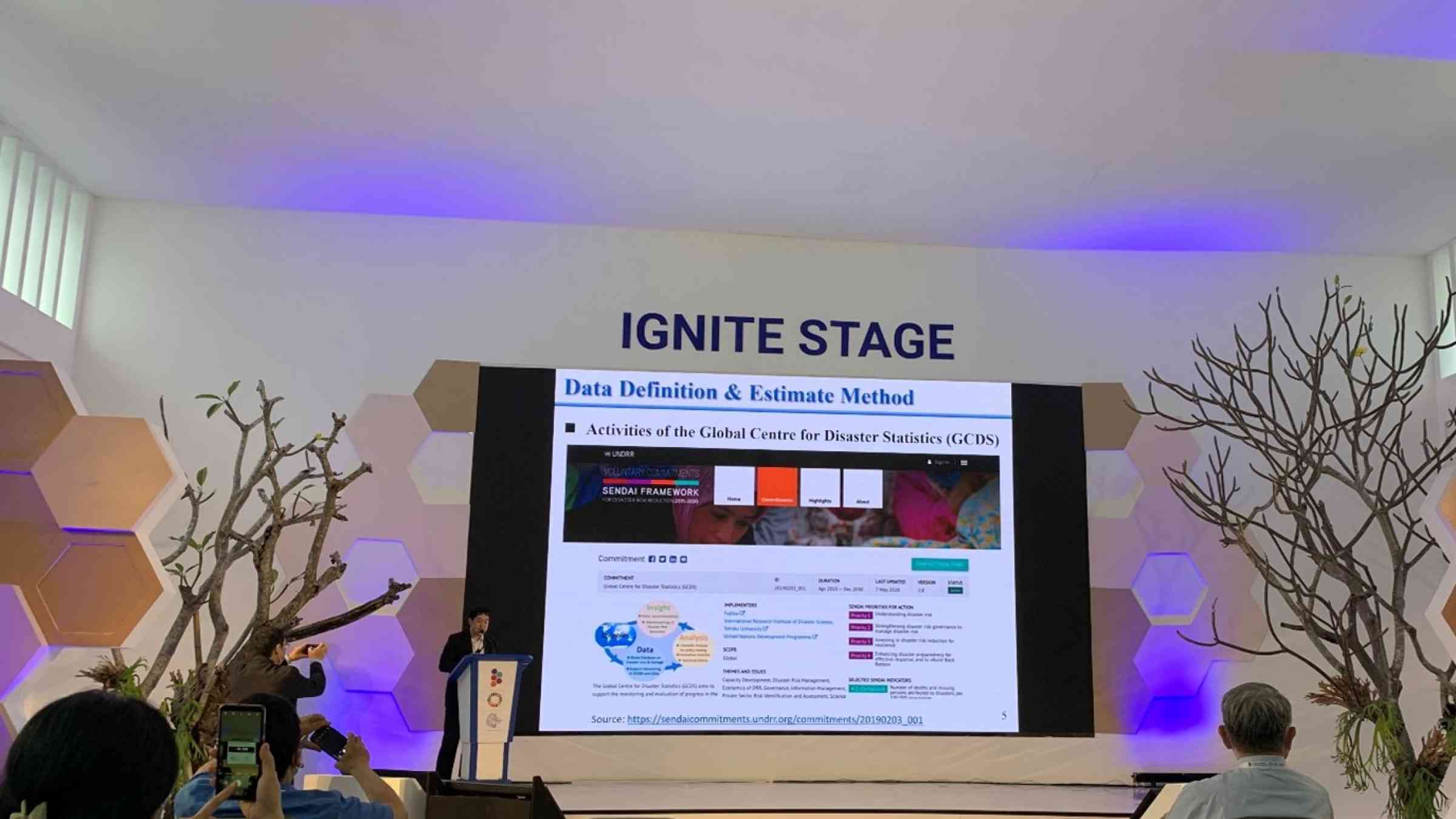
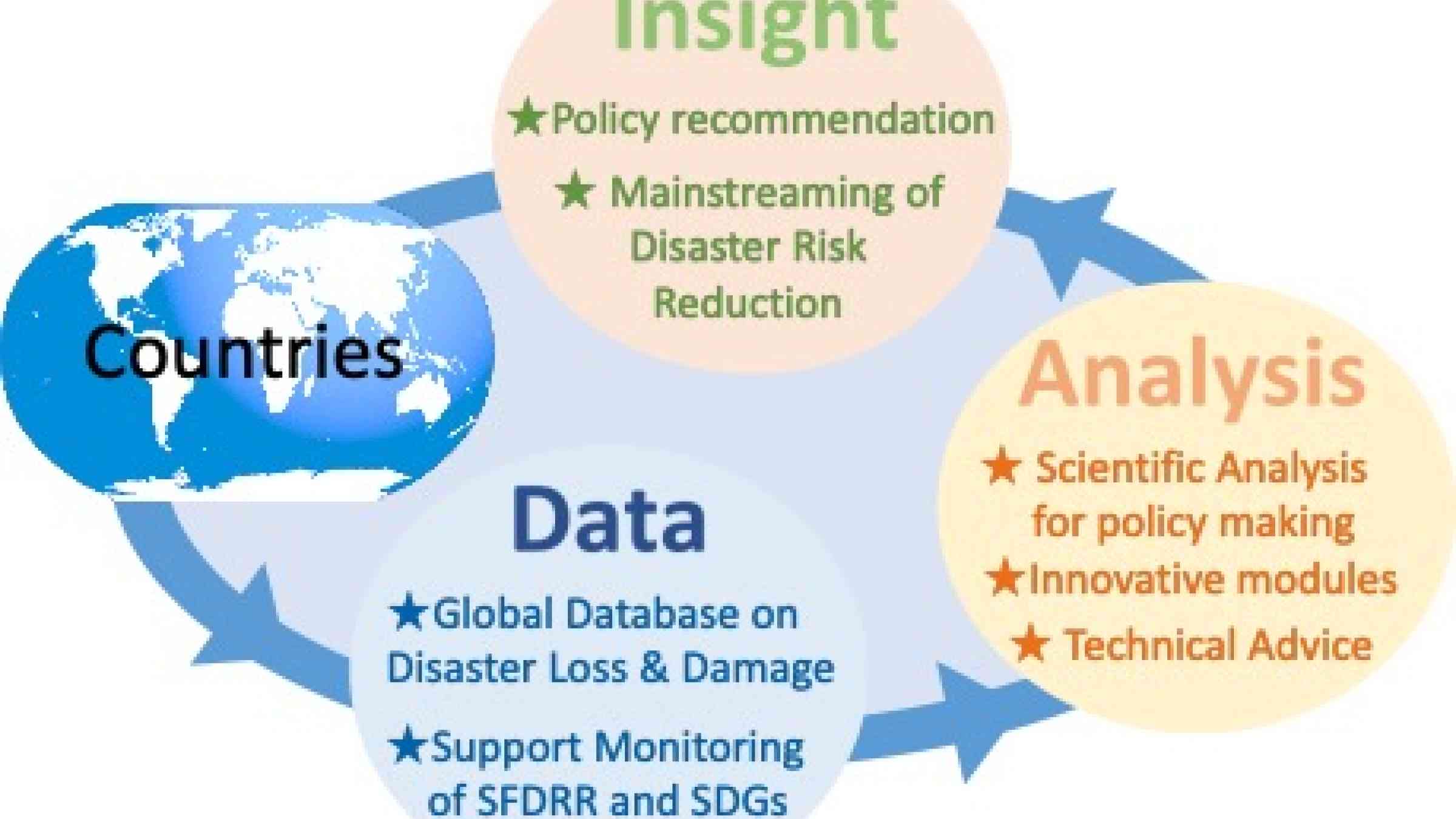
• Global Centre for Disaster Statistics (GCDS)
• Global Framework for Climate Services (GFCS)
• Global Preparedness Partnership (GPP)
• Index for Risk Management (INFORM)
• International Recovery Platform (IRP)
• Interagency Standing Committee (IASC)
• Platform for Environment and DRR (PEDRR)
• United Nations Interagency Group on Disaster Risk Reduction for Resilience
• United Nations Development Group (UNDG)
• Joint Declaration on Post-Crisis Assessments and Recovery Planning of the United Nations, the European Union and the World Bank
• Connecting Business Initiative (CBI)
National governments and local governments (Disaster Management/Preparedness, Planning, Climate Change, Environment)
Jo Scheuer, Director, Climate Change and Disaster Risk Reduction Cluster, Bureau for Policy and Programme Support ([email protected]);
Angelika Planitz, Team Leader – Disaster and Climate Risk Governance, Climate Change and Disaster Risk Reduction Cluster, Bureau for Policy and Programme Support ([email protected]);
Krishna Vatsa, Team Leader – Disaster Recovery, Climate Change and Disaster Risk Reduction Cluster, Bureau for Policy and Programme Support ([email protected])
• http://www.undp.org
• http://www.cadri.net
Voluntary Commitments
The Sendai Framework Commitments (SFVC) online platform serves to incentivize stakeholders to inform the public about their work, to provide a vehicle for sharing commitments and initiatives and for motivation toward the implementation of the Sendai Framework. In turn, UNDRR can monitor and take stock of the progress and impact.
United Nations Development Programme (UNDP) is involved in the following commitments: