My account
Menu

International Research Centre on El Niño

CIIFEN
Ecuador
UN & International Organizations
Share your work

Mission

The mission of the International Research Centre on El Niño (CIIFEN) is to promote and develop actions to consolidate science-policy interaction and the strengthening of climate and ocean services aiming to contribute on risk management and adaptation to better cope climate change and climate variability.

Disaster Reduction Goal
The CIIFEN looks forward to maximize local capacities to cope with new climate scenarios through the development of climate services for disaster risk reduction and adaptation to climate change.
DRR activities
Membership in Key Networks

Climate Outlook Forum for Western South America
RALCEA
Regional Climate Center for Western South America (implementation phase)
Hydrological Seasonal Forecast Group
Regional Modeling Group
South America Climate Extremes Group

Websites

http://www.ciifen.org

Making disaster risk reduction a policy priority, institutional strengthening (HFA 1)

The activities of CIIFEN are connected to Priority 1 by contributing on partnership development and coordination for institutional strengthening at regional level.

Risk assessment and early warning systems (HFA 2)

The lines of CIIFEN action have focused in the development of regional climate models to improve early warning and scenarios for regional adaptation to climate change; the generation of scenarios of climate risk in agriculture, environment, and others at regional scale; basic scientific research and training of scientists; the Articulation of regional and extra-scientific networks and the establishment of a regional Information System aimed to coordinate and disseminate through a complex network of institutions and mechanisms the information in a specific format for a particular actor, establishing differences in content and form to send information to government agencies, scientists, civil defense authorities, branches, trade union groups and the general public with strategies that range from the use of a virtual core, linked by the Internet, up an explanatory leaflet with graphics from the threat of an El Niño event and the participatory role of the community.

Education, information and public awareness (HFA 3)

The CIIFEN integrates existing networks and institutions, seeking to maximize the capacity created by strengthening the areas that are of greatest weakness at present and delivers added value to existing products, linking scientific and technological support to the social sectors through the tools for decision making in economic, planning and prevention.

Reducing underlying risk factors (HFA 4)

The programs in which the CIIFEN collaborates, both in ocean observation (GRASP, the GOOS Regional Alliance for the South Pacific), and the World Program of Applications and Climatic Services (CLIPS), led by the World Meteorological Organization (WMO), keep close to the forefront of societal applied sciences and provide us a versatile framework to allow a continuous impulse in the disaster prevention and risk management capacities to face hazardous episodes in the region. In this sense, CIIFEN maintains collaboration agreements with the main world Climate Prediction and Research Centers and several academic entities related with disasters prevention, sustainable development, and scientific research, which bring mutual benefits.

Preparedness for effective response (HFA 5)

CIIFEN contributes for preparedness and affective response by delivering El Niño mapping for Western South America countries to undertake preparedness to reduce El Niño and climate impacts.

Show more
Latest additions

No results found.

More content for this organization may be available on PreventionWeb or on the site search.

Voluntary Commitments

The Sendai Framework Commitments (SFVC) online platform serves to incentivize stakeholders to inform the public about their work, to provide a vehicle for sharing commitments and initiatives and for motivation toward the implementation of the Sendai Framework. In turn, UNDRR can monitor and take stock of the progress and impact.

International Research Centre on El Niño is involved in the following commitments:
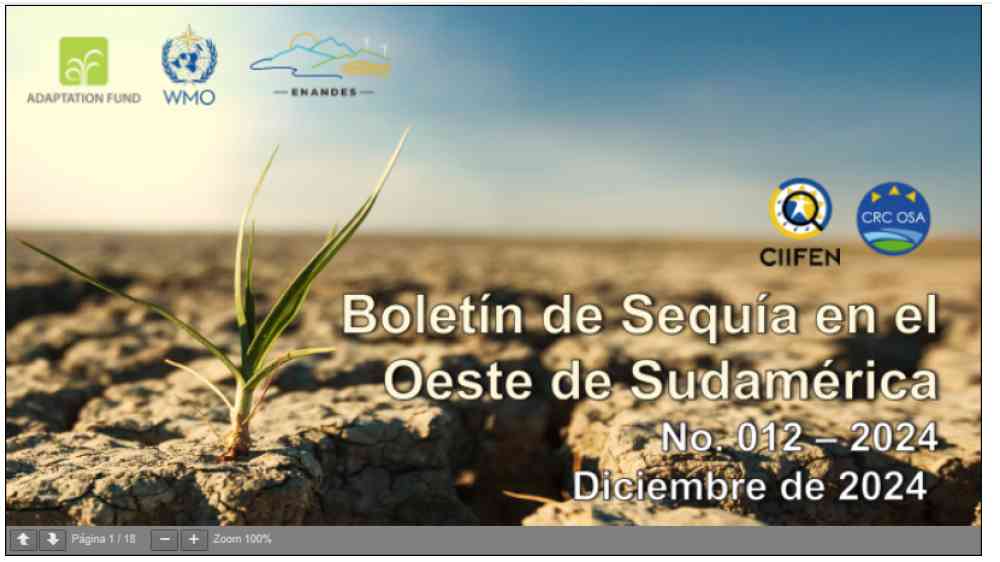
CIIFEN's drought bulletin
Regional - Americas, Bolivia, Plurinational State of, Chile, Colombia, Ecuador, Peru, Venezuela, Bolivarian Rep of
New
16 April 2025
Drought Monitoring in Western South America
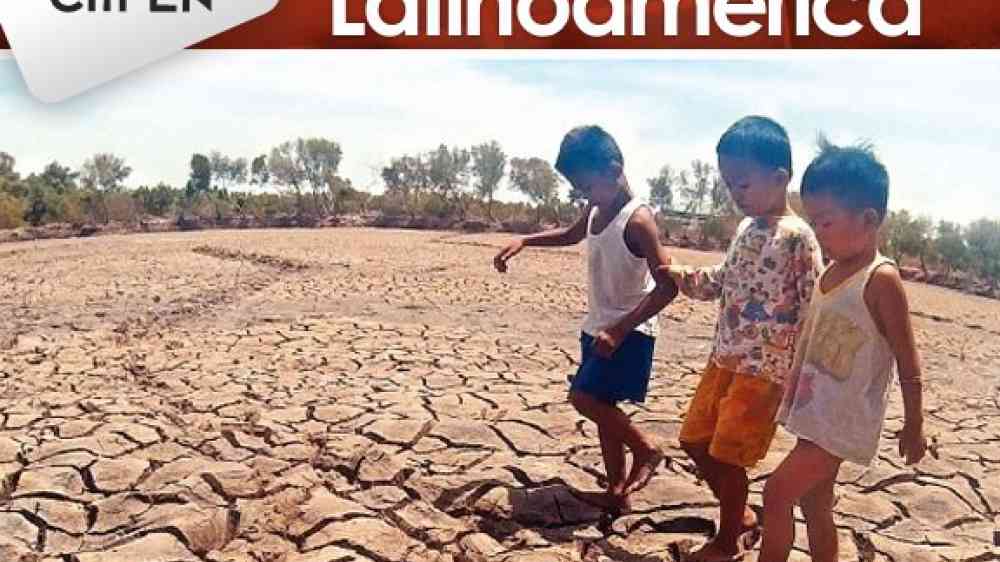
National drought monitors were built using routines that calculate a weighted mixed indicator from drought indices for Western South America countries: Venezuela, Colombia, Ecuador, Peru, Bolivia, and Chile. The analysis of the spatially integrated monitors and drought impacts are published on a monthly bulletin.
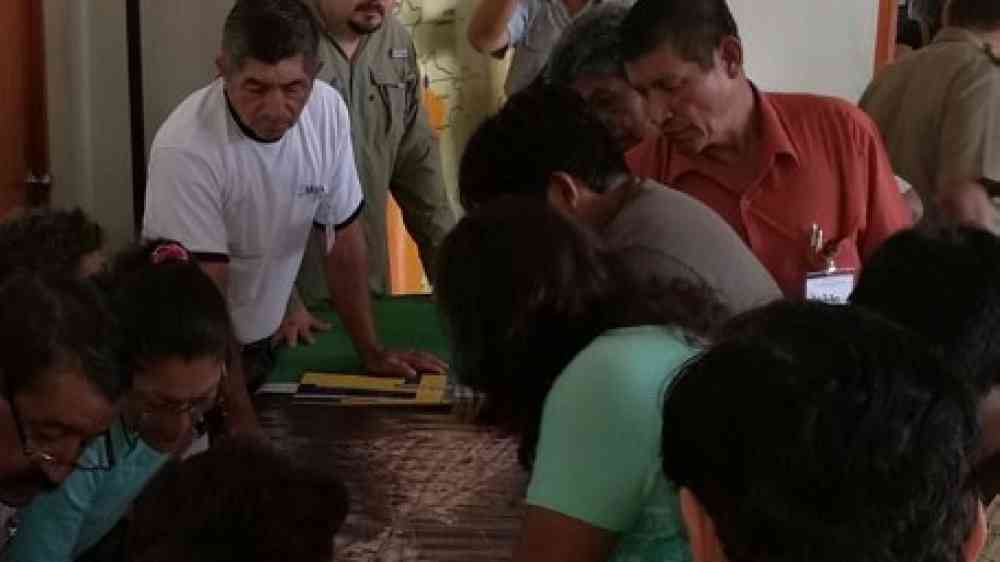
Risk Management Workshop with Community in Querecotillo, Peru
Regional - Bolivia, Plurinational State of, Colombia, Ecuador, Peru
New
Completed
15 April 2025
Methodological Approach for the Implementation of Early Warning Systems (EWS) for Floods
Methodology for implementing Early Warning Systems (EWS) for floods in binational basins, promoting risk reduction through monitoring, community participation, and strategic planning.
Volunclima members
Regional - Americas, Bolivia, Plurinational State of, Chile, Colombia, Ecuador, Venezuela, Bolivarian Rep of
New
21 April 2025
Voluntary Climate Observers Network (Volunclima) Initiative
Volunclima is a citizen science initiative managed by CIIFEN in which volunteers report precipitation, extreme hydrometeorological events, and drought. Reports are sent in near-real time via an IT platform to an open database. Network members strengthen their climate resilience through training, monitoring, and access to climate products.
Collaborative Risk Assessment with Caldas Risk Management Team
Regional - Americas, Bolivia, Plurinational State of, Brazil, Colombia, Ecuador, Guyana, Peru, Suriname, Venezuela, Bolivarian Rep of
Completed
16 April 2025
Understanding Vulnerability, Risk and Impacts for Climate Resilience (Book project)
The project involves systematizing and applying a comprehensive methodology to assess climate vulnerability, based on historical and geospatial data, emphasizing local participation, adaptation, and multisectoral governance, drawing on CIIFEN’s 10 years of experience
Cover page of the Report
Regional - Americas
New
Completed
13 August 2025
El Niño 2015-2016: Evolution, Vulnerability, And Economics And Social Impacts Of El Niño 2015-2016 Event In Latin America
This report examines the climate evolution of El Niño phenomenon In Latin America and the Caribbean, its impacts in different industries (agriculture, water management, health, infrastructure) and the governments and community responses. Lessons Learnt are highlighted in regards to better preparation and mitigation efforts for future events.

Contact information

http://www.ciifen.org/
[email protected]
+593 4254770
Fax:
+593 4254771

The Sendai Framework Voluntary Commitments (SFVC) online platform serves to incentivize stakeholders to inform the public about their work, to provide a vehicle for sharing commitments and initiatives and for motivation toward the implementation of the Sendai Framework. In turn, UNDRR can monitor and take stock of the progress and impact.

Contact SFVC Newsletter

Loading

Is this page useful?

Yes No
Report an issue on this page

Thank you. If you have 2 minutes, we would benefit from additional feedback (link opens in a new window).