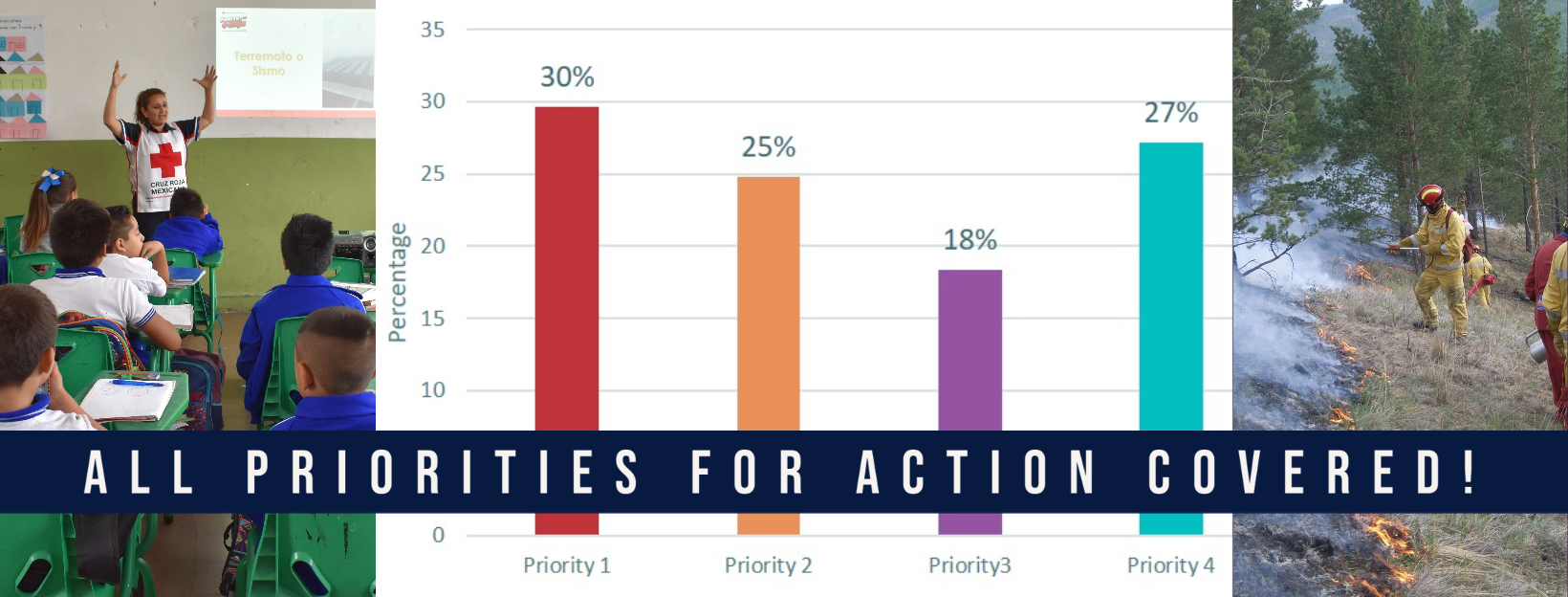
Stakeholders’ voluntary commitments address all four Sendai Priorities for Action
The Sendai Framework for Disaster Risk Reduction 2015-2030 (Sendai Framework) was the first major agreement of the post-2015 agenda. It was designed to work in alignment with other major global agreements on sustainable development, climate change, and urban planning, among others.
The Sendai Framework has four priorities for action to substantially reduce disaster risk and losses: Priority 1, understanding disaster risk; Priority 2, strengthening risk governance; Priority 3, investing in disaster risk reduction; and Priority 4, enhancing preparedness for effective response and to build back better.
The responsibility to fulfill these priorities is shared between the State and stakeholders including local governments, the private sector, etc. The Sendai Framework Voluntary Commitments online platform allows stakeholders to showcase their efforts in support of the implementation of the Sendai Framework. While data from this platform indicate that commitments have a balanced coverage of Priorities 1, 2, and 4, Priority 3 needs more attention. This calls for more investment in structural and non-structural measures to enhance the resilience of persons, communities, and nations.