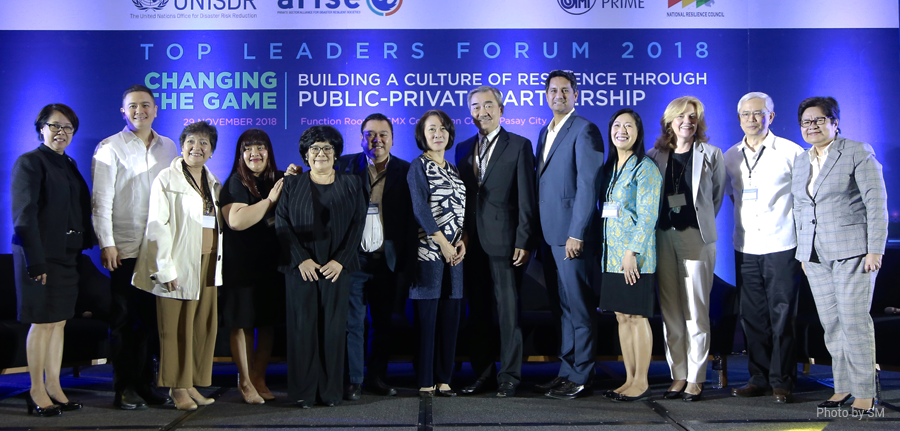
Building Resilient Local Government Systems in the Philippines
NRC commits to building a resilient Philippines using S&T-based public-private partnerships, enhance LGU capacities with evidence-informed risk governance, strengthen and sustain high-level collaboration between government and industry and launch the resilience program with a core group of LGUs.
Description
The Philippines is making strides in disaster risk reduction, but even with the Republic Act 10121—an act strengthening Philippine disaster risk reduction and management—and the establishment of the National Disaster Risk Reduction and Management Council, the country still has work to do to address DRR, climate change and resilience.
As a science and technology-based and evidence-informed public-private partnership (PPP), the National Resilience Council (NRC)—formally launched in November 2017—is pursuing a disaster and climate resilient Philippines by strengthening the country’s disaster risk reduction (DRR) and resilience capacities through its local government units (LGUs), in close collaboration with the government, private sector, academe, scientific community and civil society.
NRC’s work responds to the priorities of the Sendai Framework for Disaster Risk Reduction (SFDRR), which highlights the importance of collaboration between and among various sectors. It also takes off from national instruments, DRR directives of government agencies, as well as other global frameworks like the Sustainable Development Goals, the Paris Climate Agreement and the New Urban Agenda.
For its commitment, NRC aims by the end of the year 2021 to achieve its mission through its RESILIENT LOCAL GOVERNMENT SYSTEMS PROGRAM. It covers Leadership for Resilience, a two-track (Leadership & Governance (L&G) and Science & Technology (S&T)) program done across a three-year runway for LGUs to develop and implement resilience initiatives, supported by a localized Resilience Scorecard that cuts across pillars on Leadership and Governance, Human Development, Local Economy, Infrastructure and Environment. Within three years, the program will have six capacity building modules, and each year will correspond to a stage that will build on each other to achieve disaster resilience—PREPARE, ADAPT and TRANSFORM. Its other deliverables shall include securing pre-agreements with the private sector and conducting trainings on Climate and Disaster Risk Assessment (CDRA).
With a localized approach to DRR and backed with both global and national instruments, NRC envisions a stronger foundation for the Philippines against potential hazards and risks.
Did the Sendai Framework change or contribute to changes in your activities/organization? If so, how?
Yes. NRC anchors its work on international guiding documents such as the Sendai Framework, which advocates sharing the responsibility of addressing disaster risk reduction and resilience concerns with other sectors in society. It highlights the critical role of the private sector, not only in reducing risks, but in preventing new risks from being generated. The NRC serves as a platform for the advancement of the objectives of UNISDR, in partnership with the national government, the private sector, academe and civil society.
What led you to make this commitment/initiative?
What was your position before making this Voluntary Commitment / prior to the Sendai Framework?
The Philippines is situated within the Pacific Ring of Fire, making it vulnerable to earthquakes and tsunamis, and is generally considered one of the most at risk to natural climate, weather & geological hazards. These circumstances prompted the development of better strategies on disaster risk reduction, climate change adaptation & sustainable development. But even with the DRR programs & a promising economy, it was still ranked 3rd as most at risk to natural hazards from 2011 to 2016 (UNU-EHS) & 4th as having high human cost to weather-related disasters from 1995 to 2015 (CRED-UNISDR).
This is consistent with NRC’s aim to build a resilient Philippines through S&T-based public-private partnerships. From the start, it believes in multi-stakeholder collaboration in addressing DRR & resilience challenges in the Philippines. NRC is determined to act on its advocacy & this is reflected in its approach with its Resilient LGU Program & Resilience Scorecard, which considers inputs & advice from various sectors such as government, private sector, academe, scientific community & civil society.
Deliverables and Progress report
Deliverables
Deliverables are the end-products of the initiative/commitment, which can include issuance of publications or knowledge products, outcomes of workshops, training programs, videos, links, photographs, etc.
Part of NRC’s program is a certificate course on Climate and Disaster Risk Assessment (CDRA) which comes in 3 phases: Training that includes lectures, demonstrations, and hands-on exercises; Coaching and mentoring; and Integrated risk mapping. It involves both physical and social dimensions for a holistic approach on risk assessments.
These will ensure partners identify risk baselines and targets through scorecards and to chart resilience roadmaps from prepare, adapt and transform stages. With risk assessments and geospatial databases as final output, these will contain a combination of thematic layers categorized as Hazard, Exposure, Vulnerability (HEVs) at different scales with respect to space and time. Generated and presented maps should be according to pillars and sub-pillars of the resilience framework and scorecard. The output for this will be the Manila Observatory’s CDRA Training Module.
NRC’s Leadership for Resilience Program is composed of the Leadership & Governance (L&G) and Science & Technology (S&T) tracks, which makes use of demand-driven partnership models, policy development support and localized assessment tools to respond to resilience challenges. The two-track three-year runway emphasizes the important roles of local leaders and resilience teams in the development and implementation of the resilience initiative in their local government systems.
It is composed of two modules per year with coaching and mentoring sessions in between workshops. Each year corresponds to a specific stage—PREPARE, ADAPT and TRANSFORM—and will have identified deliverables and outputs. This deliverable will have three reports or one for each stage of the program.
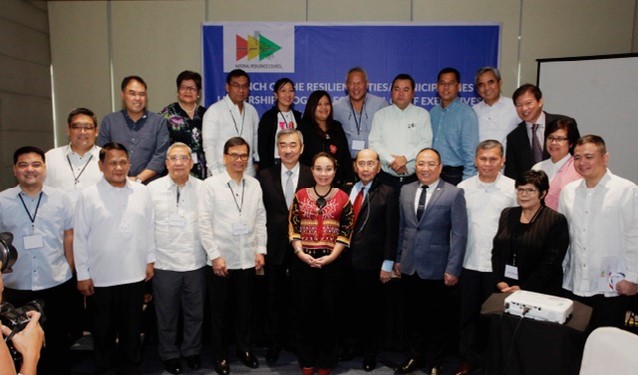
The NRC Resilience Scorecard serves to establish the capacity building inputs needed by the LGU to enable them to accomplish the performance indicators and sustain their accomplishments to ensure the resilience of their local government systems. This deliverable will consist of reports on the following: Baseline scorecard from the beginning of the program; Scorecard ratings at the end of each year; and the action plans to address the gaps. An abridged version of the NRC Resilience Scorecard is uploaded on preventionweb.net.
One of NRC’s aims is to strengthen collaboration with various sectors as it pursues a disaster and climate-resilient Philippines. This will be done through pre-agreements with the private sector, which will highlight the cooperation, coordination and collaboration of the parties to Local Government Units (LGUs) before, during and after disasters. These will thereby be formalized partnership agreements between the National Resilience Council, private sector and the LGU on major lifelines such as logistics, food supply, medical services, communications and power. The deliverable will be a document on the pre-agreements established by 2021.
Porgress report
The NRC works to enhance internal and external capacities of local resilience councils under the Leadership for Resilient LGU Program which is guided by the Bridging Leadership framework for Resilience that puts emphasis on ownership, co-ownership, and co-generation of resilience priorities and actions along the tracks of Science and Technology, in partnership with Manila Observatory, and Leadership and Governance, through the Zuellig Family Foundation. To support this initiative, the NRC has established a network of Academic Institutions and Scientific Organizations both at the local, national and international level, to effectively bridge the gap between science, policy and practice in resilience building. More importantly, it has partnered with local academic institutions to optimize local expertise and knowledge in building resilience, as well as secure program and partnership sustainability.
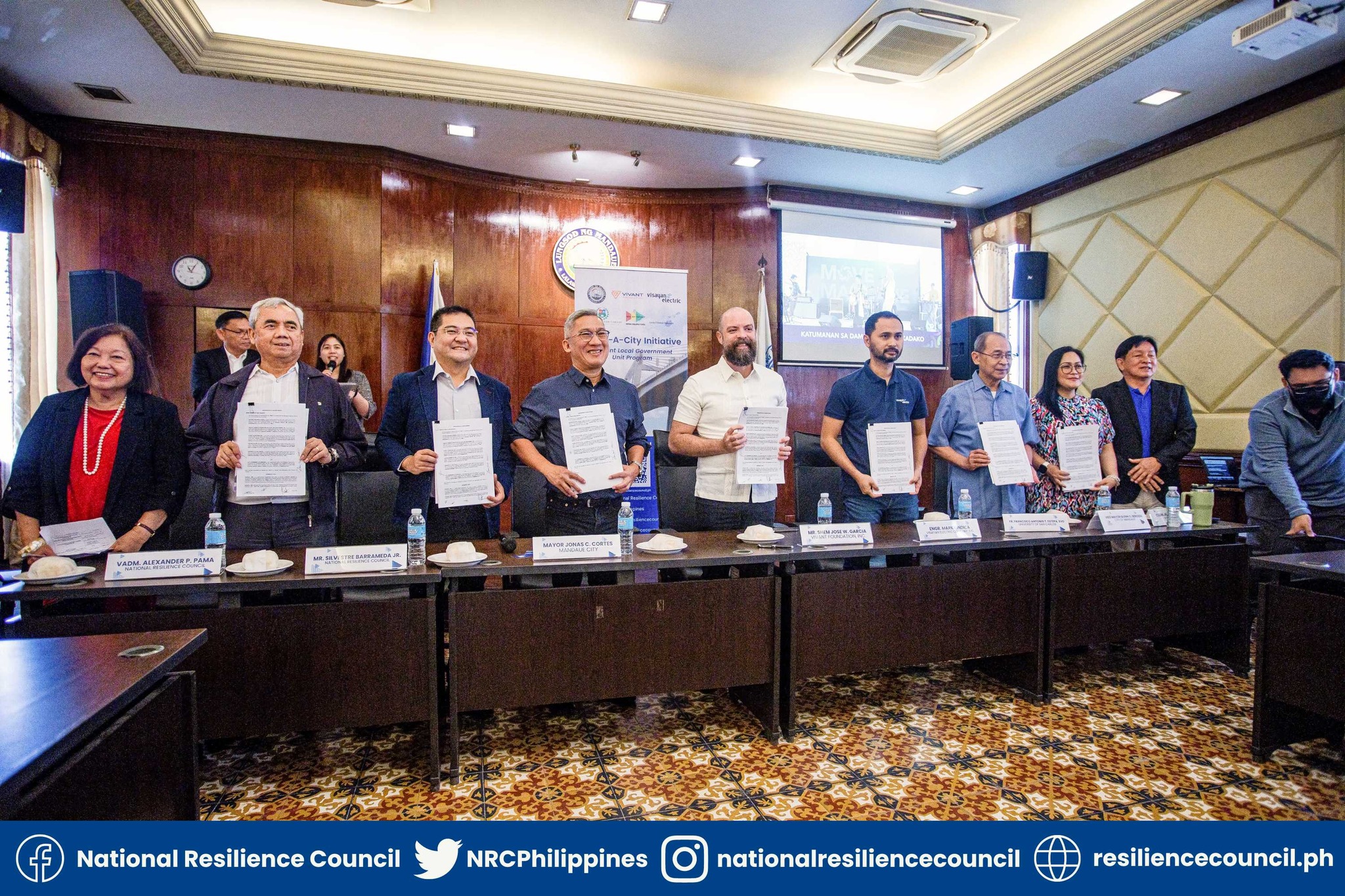
NRC is able to strengthen and sustain high-level collaboration with NGAs and key decision makers by working with Resilience Champions from government to advance policy advocacy for resilience and secure buy-ins from critical policy makers. To date, the Council has also formally institutionalized partnerships with fourteen (14) national government agencies. At the local level, all of NRC's nine (9) LGU partners have issued executive orders creating and establishing a multi-stakeholder local resilience council which identifies, implements, oversees, and evaluates context- and demand-driven resilience solutions to address the challenges imposed by climate and disaster resilience.
Organizations and focal points
Implementing Organization(s)
- Zuellig Family Foundation
- National Resilience Council
- Ateneo de Manila University
- Manila Observatory, the
Focal points
Partners